
In November 2023, Israeli influencer and fitness trainer Hen Ben Moha shared a viral video of an aerobics class. In it, rows of Lululemon-clad Israeli women bounced up and down in unison, their bodies synchronized, voices unified in a chant: “May your village burn.”
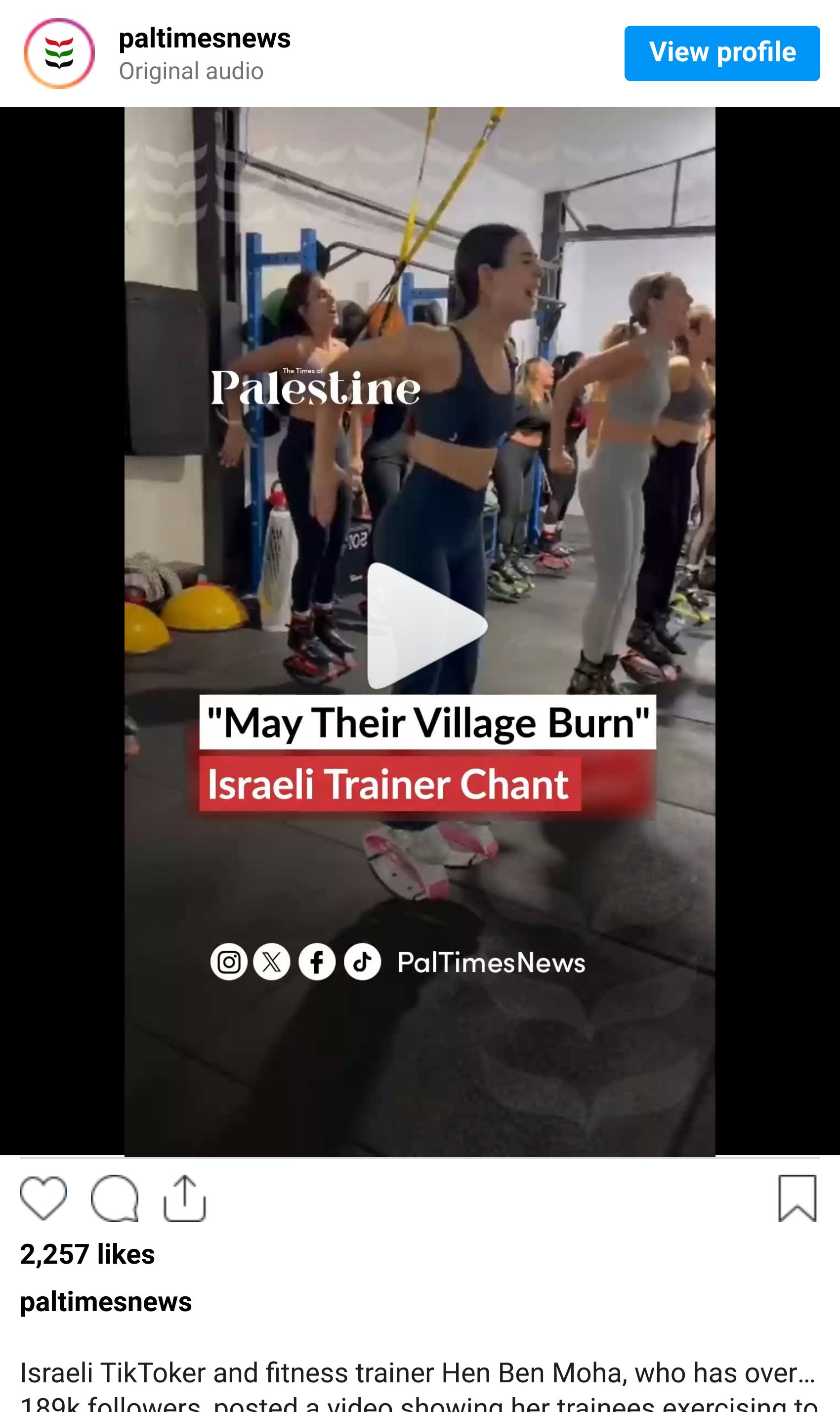
You can see their faces agitated by sweat, their certainty, the way the rhythm of the words becomes ritual itself, a one-two-kick, a one-two-bounce, as they repeat, “May your village burn.” It’s the casualness of it that haunts—not the sociopathy expressed, but the ordinariness with which it is stated. The banality of evil is astonishing, as Hannah Arendt knew, because of the ease of the villainy. This was not a military parade or a political speech; it was a fitness class. Genocide as aerobics routine.
Something about that video connected me to a feeling I’ve come to know well in spiritual spaces, from ayahuasca ceremonies to yoga retreats: a particular kind of disconnection between the work one claims to do internally and the violence one enables externally. In 1984, American psychotherapist John Welwood coined the term “spiritual bypassing” to describe what he observed in Buddhist communities: how easily spiritual ideas, practices, or beliefs displaced unresolved wounds so that, instead of healing the core wound, there was only a surface presentation of self, spiritual posturing rather than edification. He was describing the gap between the story we tell about ourselves and the person our actions reveal us to be. Having grown up in these spaces over nearly 40 years, I’ve come to see this dislocation more readily, perhaps because I finally have language for it.
Join Today as a Founding Subscriber to Keep Reading
We're close to hitting 1,000 paying subscribers, but there's still time to become a founding member of The Key at an introductory low price. Join today for high-quality and fresh journalism that covers Palestine as the story at the heart of the modern world.
Become a Founding SubscriberSubscribe Today For:
- Access to all stories and our growing archive
- Our weekly newsletter about Palestine events worldwide
- Discounts from great publishers and bookshops
- Our curated book service, the PalFest Bookshelf
- Early bird tickets to live Palestine Festival of Literature events
