Hello and welcome to our weekly dispatch.
This past week, on April 17, we marked Palestinian Prisoners’ Day, honoring the more than 10,000 Palestinian captives held in Israeli prisons, including more than 3,500 held without charge in administrative detention. Commemorating the release of political prisoner Mahmoud Bakr Hejazi on April 17, 1971, Palestinian Prisoners’ Day is especially charged this year following Israel’s new death penalty law which targets Palestinians alone.
Below we include a brief excerpt of the late Walid Daqqa’s remarkable letter On Parallel Time, translated into English by Nour Eldin Hussein and published by Mizna last year. Daqqa died two years ago after more than 38 years held captive by Israel. In this letter, Daqqa describes how Israel systematically colonizes time, even as he marks the intellectual and spiritual core of the Palestinian prisoner, which Israel will never be able to colonize.
I profess now, in my twentieth year of imprisonment, that I am still no good at the hatred, nor the crudeness, nor the coarseness that life in prison imposes. I profess now that I still rejoice at the barest of things with the glee of small children. I am still filled with delight at a kind word of encouragement or compliment. I profess that my heart skips a beat at the sight of a flower on the television, at a scene of nature, at the sea. I profess that I am joyous despite it all, and I yearn not for any pleasure of the many pleasures of the world save for two: the sight of children, sent off from all corners of the village to their schools; and the sight of workers in the early hours of the morning as they proceed from the alleys of the neighborhoods in a dusty, wintry morning, toward the town square—vital, prepared to travel to their place of work. And I profess now that all these feelings, all this love, would not have remained if not for the sole and solitary love of my mother, the love of Sanaa and my brother Hosny, the support of my people and my dearest friends who surround me on all sides—I to them, and they to me.
I profess that I am still a human being holding onto his love as if it were a flaming torch. And I will remain steadfast in that love—I will continue to love you all, for it is love and love only that remains my sole victory over my jailers.
This week in the newsletter we have:
A PalFest/Ibraaz event with Tom Suárez in London
A talk by Palestinian architect Antoine Raffoul in London
A workshop with Lama Hassan at Dar Jacir in Bethlehem
A Bilna’es book launch with Jasbir Puar and Nasser Abourahme in New York
Edward Salem’s Intifadas as the Book of the Week
Your weekly Media Roundup
Upcoming Events
London: Palestine Mapped with Tom Suárez, 22 April
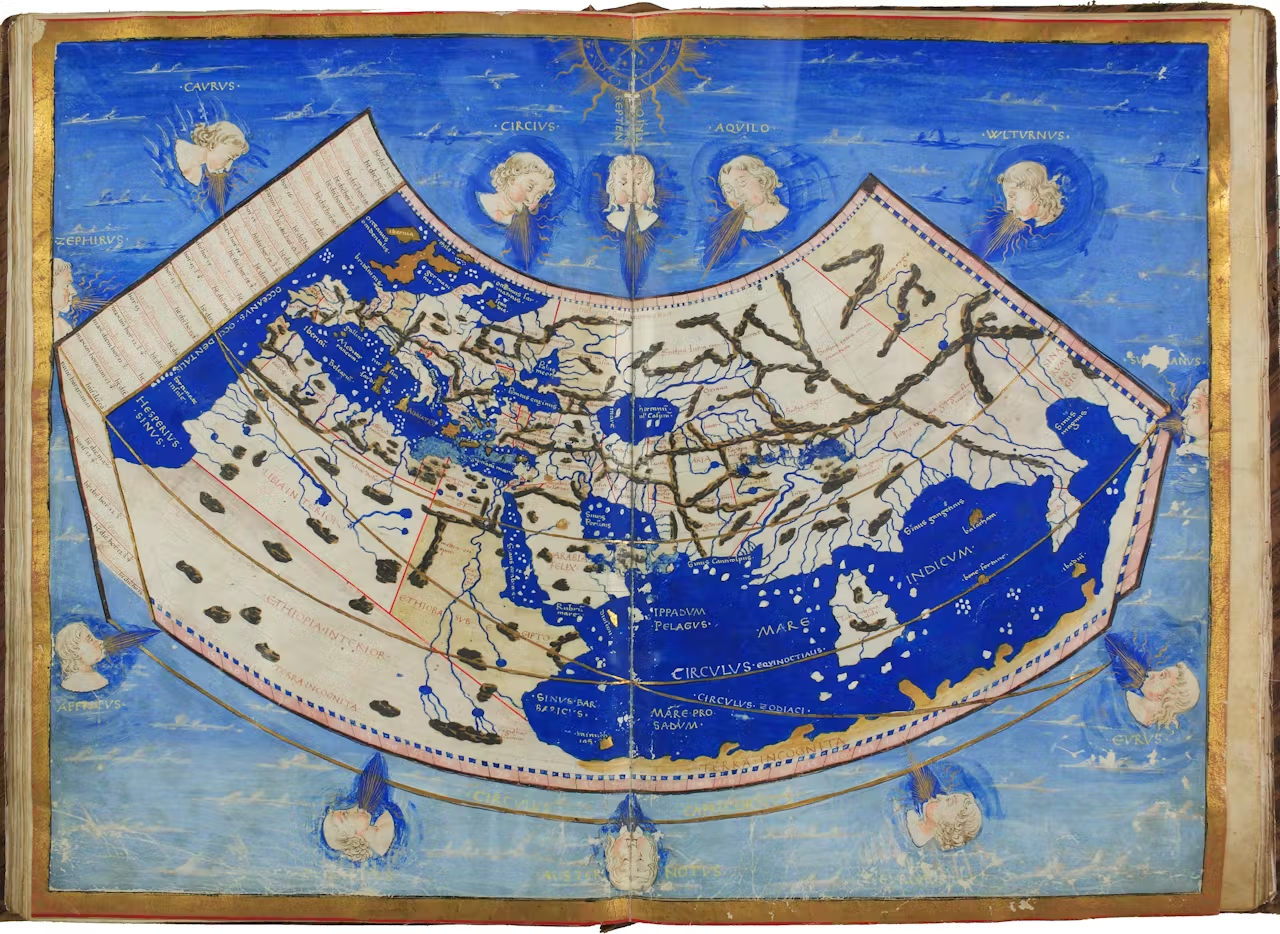
Palestine Mapped is a book mapping historic Palestine from the earliest record through the early twenty-first century.
Drawing from his research that culminated in this work Tom Suárez will explore the mapping of Palestine both as physical map-making and cultural ‘hard-wiring’ in the West in this illustrated talk.
Tom Suárez is best known for his critically acclaimed book, Palestine Hijacked – how Zionism forged an apartheid state from river to sea. His new work, Palestine Mapped, explores the history of the mapping of the region and the manipulation of geographic thought that has contributed to today’s genocide. A professional Juilliard-trained violinist and composer, he is a former faculty member at Palestine’s National Conservatory of Music.
Beginning with a challenge to modern presumptions of ‘personhood’ in relation to the nation-state, and a review of the mapping of the region, from the earliest extant record: the ancient Greeks and Romans. Then the medieval period brings both secular and religious mapping of Palestine, and with the Reformation comes the proto-Zionism that leads to the fateful nineteenth century. A principal focus will be the way geographic thought both reflected and furthered the rise of Zionism.
The talk will conclude with a look at how the movement for Palestinian liberation might be more powerful by moving beyond unwittingly adopted ethno-geographic frameworks.
This event is presented in partnership with Ibraaz, who will be hosting the event.
London: From Lifta to Gaza: The Reconstruction of Memory, 23 April
A talk by architect Antoine Raffoul about memory and reconstruction in Palestine.
Both Gaza and the historic village of Lifta lie along the famous 2,000-year old Silk Road, a trading route which joined Africa with West Asia passing through Palestine.
The focus of the talk will be the campaign which was successfully launched more than 10 years ago to protect Lifta and which will be the launch pad for the reconstruction of Gaza, thus joining it to Jerusalem and nearby Lifta.
In doing so, the long awaited 'Right of Return' of all refugees to their homes will become a reality after more than 75 years.
Become a subscriber to PalFest & The Key
By now you’ve heard about The Key, our brand-new online magazine which is dedicated to covering Palestine as the core issue at the heart of the modern world.
We are committed to making as much of our work free on publication as possible, so have launched our new subscription drive.
Across all our publications and live events and we are building platforms for writers and thinkers whose work is committed to the liberation of Palestine and resistance to colonialism.
We hope you would consider supporting our work by becoming a paid subscriber.
For $2 a month, you’ll get new articles on The Key, as well as full access to its growing archive and the PalFest Podcast - and you’ll be the first to know about our upcoming events in your city.
At $10 a month we’ve organised for 10% discounts at bookshops and publishers around the world, as well as in our own shop.
For $15 you’ll get a PalFest Bookshelf book selection in the mail every two months, along with unique extras.
There are even more options at $25 and above - check out our Subscriber tiers and see what might work for you.
Thanks for supporting our work.

Bethlehem: Plants Don’t Care About Borders, 25 April

يسعدنا أن ندعوكم للانضمام إلى الفنانة المقيمة لدينا، لما حسن، يوم السبت ٢٥ نيسان الساعة ٥ مساءً.
يُعد هذا العرض وورشة العمل التفاعلية للأرشفة جزءاً من مشروع "ديسين: النباتات لا تهتم بالحدود"، وهو مشروع للسرد الرقمي يستكشف موضوعات الهجرة، والهوية، والانتماء عبر منظور الزخارف النباتية. سيتفاعل المشاركون مع نسخة أولية من تطبيق "ديسين" الإلكتروني، والذي يدعو المستخدمين إلى التأمل في علاقتهم بالمكان من خلال نبات أو زخرفة مختارة، لإنتاج مخرجات سردية قصيرة تربط التجربة الشخصية بتاريخ أوسع لحركة النباتات والتبادل الثقافي.
إلى جانب هذه التجربة الرقمية، ستكون هناك محطة للتجربة الحسية تضم مجموعة من العينات النباتية المرتبطة بالزخارف الشائعة في الحرف اليدوية الفلسطينية المحلية الأصيلة. سنعمل معاً على بناء أرشيف جماعي للسرديات القائمة على النباتات، مستخدمين الزخارف النباتية والتقاليد الحرفية كحوامل للذاكرة، والحركة، والانتماء.
الورشة باللغة الإنجليزية.
التسجيل مطلوب نظراً لمحدودية المقاعد.
Join Dar Jacir resident Lama Hasan on Saturday April 25th at 5 PM. This participatory archiving presentation and workshop is part of Desen: Plants Don’t Care About Borders, a digital storytelling project that explores migration, identity, and belonging through the lens of plant motifs. Participants will engage with a prototype of the Desen web app which invites users to reflect on their relationship to place through a selected plant or motif, generating short narrative outputs that connect personal experience with broader histories of plant movement and cultural exchange. Alongside this digital experience, there will be a tactile station featuring a selection of botanicals connected to motifs commonly found in local indigenous Palestinian crafts. We will build a collective archive of plant-based narratives, using botanical motifs and craft traditions as carriers of memory, movement, and belonging.
Workshop is in English.
New York: This Death is Not One: A Bilna'es Book Launch, 1 May

"By the sea" © Xaytun Ennasr
In 2017, the critical theorist Jasbir Puar published The Right to Maim: Debility, Capacity, Disability. While the work offered a complex and rigorous anti-capitalist account of disability, as well as a scathing analysis of Israeli biopolitical policy, the book cohered a political logic in writing before it was visibly evident on the ground, and as such, the work has had something of a delayed reception in Palestinian contexts.
In 2026, the adisciplinary publishing platform Bilna’es is addressing this delay by releasing a new publication — “This Death is Not One”: Debilitation and Inhuman Biopolitics in Palestine — that includes the last chapter of Puar’s book alongside the first Arabic translation of the text, a new preface from Puar reflecting on her work from within this moment of genocide, an introduction by Nasser Abourahme reflecting on the book’s stakes in the present, and illustrations by Xaytun Ennasr. For this release event at The Poetry Project, Puar and Abourahme will be joined by Adam HajYahia for a conversation about the text, translation, the right to maim, the temporality of genocide, and living in death.
Book of the Week

Written across Palestine and its diaspora—from Gaza and the West Bank to the United States—Intifadas is a subtly transgressive poetry collection about uprising in its many forms—in art, politics, and in our most personal relationships. Whether by dumping black paint on a park where a tank and fighter jet commemorate a war, or by trying to rescue a moth trapped in a garage, the defiant and resilient voices in this collection subvert traditional narratives of loss.
Furious, tender, and darkly funny, Intifadas asks what art can do in the face of catastrophe, and answers with poems that refuse easy consolations.
Of the book Marwa Helal said “If empire could become a witness to itself, it would look like Salem's work—a beautiful soul who has somehow managed to condense a tremendous amalgam of our collective history and culture without denying either part's intimacy or violence.”
Intifadas is out tomorrow from Sarabande Books.
And now a Word from a Sponsor
As we try to build a self-sustaining media platform that keeps Palestine at its heart, we are experimenting with certain adverts that will pay us $1+ for one click from you. So if you’d like support this newsletter, give the below advert a quick click . . .
Tired of news that feels like noise?
Every day, 4.5 million readers turn to 1440 for their factual news fix. We sift through 100+ sources to bring you a complete summary of politics, global events, business, and culture — all in a brief 5-minute email. No spin. No slant. Just clarity.
Media Roundup
Won’t the Body of This Endless Night Decay? – A new piece of writing by Haidar al-Ghazali, translated by Omar Berrada: “They say the war is over, but my father has not returned from the genocide. Genocide ends and returns nothing to its place, and we are supposed to believe. And we are supposed to live as though it had never happened.”
Israel’s Largest Land Grab Since the Nakba – Tamara Nassar reports on the unprecedented approval of 34 new settlements in the West Bank, including six in an area where there has been no prior Israeli presence.
Four Women in Berlin – Alaa Alqaisi writes of finding unexpected kinship among women bound by cross-border grief: “Care is too easy a word. I had already learned how Palestine can become, in some mouths, a moral accessory: a place from which to speak well of oneself, a wound admired at just enough distance to remain useful. With her, it entered life.”
All They Will Find is Sand – Eyal Weizman writes of how Israel has turned Gaza into a demolition zone as well as a construction site, articulating the ways in which reconstruction plans for Gaza merely constitute a new phase of the genocide.
Israel’s Gaza Doctrine Extends to Academic Institutions in Lebanon – Amy Fallas describes how Israel’s targeted killing of prominent Lebanese academics represents the first stage of its targeting of schools and universities in Lebanon, a strategy that it honed in its scholasticide in Gaza.
Hopelessness and Love in an Israeli Prison – Toby Lichtig reviews The Tale of a Wall, a prison memoir by the writer Nasser Abu Srour, who was released from Israeli prison this past October after 33 years in captivity.
Bearing Witness to the Parts of the Whole – Randa Abdel-Fattah reflects on the fragmentation she has felt since October 7, caught between daily life and the normalization of live-streamed annihilation of Arab and Muslim lives.
Prominent Journalist Ahmed Shihab-Eldin Has Been in Jail for Six Weeks in Kuwait, Faces Trial in Special Tribunal – Sharif Abdel Kouddous reports on the arbitrary arrest and detention of the Palestinian-Kuwaiti journalist Ahmed Shihab-Eldin in early March, seemingly for his reporting on the fallout of the US-Israeli war on Iran among GCC countries.
Iran Remains an Obstacle to the ‘Greater Israel’ Project – Samer Jaber argues that Israel’s failure to defeat Iran represents a major setback for its plans to establish total regional hegemony.
Support for Settlement of Lebanon Goes Mainstream in Israel – Maya Rosen describes how the rightward drift of Israeli society has afforded the Israeli government opportunities to promote and expand the movement to settle southern Lebanon and to begin expanding Israel’s border farther north.
The Language of Tatreez: How Palestinian Embroidery Became a Symbol of Identity and Artistic Narrative – A new episode of the Tarwida podcast that explores the history and cultural significance of Palestinian Tatreez in this interview with artist and author Joanna Barakat, focusing on the evolution of embroidery from a village craft to a global symbol of national identity.
A Body That Outlived Its Heart – Writing from Gaza, Abdullah Hany Daher struggles to find channels for his mounting grief: “I write because writing is the last trace of feeling. And perhaps in writing I discover that a dead heart is not complete death, but a stage the survivors pass through to keep going.”
Refer Friends for Free Books
If you’ve started reading The Key you can refer your friends with your unique reference code below. If five friends sign up we’ll send you a free .epub of Saleem Haddad’s brilliant new novel, Floodlines. Get twenty people signed up and we’ll mail you a copy of the Selected Plays of Ismail Khalidi!
‘Til next week.
