Hello and welcome to this week’s dispatch.
This week marks 59 years since the Naksa. In 1967, Israel seized the territory of historic Palestine that had been under Jordanian and Egyptian control since the Nakba in 1948, expanding its territory by more than three and a half times. Over the course of six days, Israel occupied the West Bank, East Jerusalem, the Gaza Strip, the Golan Heights, and the Sinai Peninsula, expelling more than 300,000 Palestinians from their homes in the process. One of the most consequential moments in Palestinian history, the Naksa entrenched Israeli rule over much of historic Palestine. But it also planted the seeds for popular insurrection and mass organizing that form the basis of the Palestine liberation movement today.

Poster by Jamaa al-Yad, 2011
Below you can read an excerpt of the late historian Walid Khalidi’s statement to the UN General Assembly in July 1967, in which he spells out the clear colonial intentions of the Israeli state. With Israel making renewed efforts to Judaize the Al-Aqsa mosque compound and much of the rest of East Jerusalem, Khalidi’s words remain troublingly relevant today.
The body politic of the Palestinian Arab community has always been treated in this cavalier fashion by the Zionists. The partition of Palestine was no less than the vivisection of the Palestinian Arab community. Limb by limb, the body politic of the Palestinian Arab community was devoured by the political and territorial cannibalism of Zionism. With 5 June came the opportunity, or so it seemed to Israel, to finish off the head at Jerusalem and the bleeding torso on the Western bank. Those who talk about the Arab refusal to recognize the right of Israel to exist sometimes forget that under the floorboards of every Israeli home lies a fragment of the corpse of the Palestinian Arab body. […]
It is as clear as daylight why Israel wants Jordanian Jerusalem. It is the strategic key to the West Bank. It isolates the southern half of the West Bank around Hebron from the northern half around Nablus. By controlling Jordanian Jerusalem, Israel can dominate the entire West Bank, control its commerce and communications, shatter its civic harmony, disrupt its administrative life, dominate the approaches to the River Jordan, suck out the handsome annual revenues that accrue from the tourist traffic and pilgrimages, and pounce at will upon any attractive prey in sight, whether moving or stationary.
Scroll down for:
A new episode of the PalFest Podcast, featuring a conversation between Isabella Hammad and Hisham Matar on the stakes of Edward Said’s work for the present;
A book event in London with Samar Yazbek, Sondos Sabra, Leri Price, and Yasmin El-Rifae;
A UK book tour for Palestinian poet Fargo Nissim Tbakhi, whose book Terror Counter is forthcoming in the UK;
An event at Palestine House in London, on the parallels between colonized Western Sahara and Palestine;
Hannah Moushabeck and George Abraham’s edited collection Homosexual Intifada as your book of the week; and,
Your weekly Media Roundup.

New on the PalFest Podcast: Isabella Hammad and Hisham Matar on Edward Said

Edward Said needs no introductions, but what happens when writers are asked to newly introduce the works that helped define his legacy?
In this episode Isabella Hammad, who writes the introduction to a new edition of Said’s Representations of the Intellectual, and Hisham Matar, who does the same for his memoir Out of Place, discuss Said’s work and their own takes on many of the questions he thought about: the category of “the intellectual,” the particular modes of thinking and being that writing fiction demands, self-making in exile, and late style.
This episode was recorded in New York at Young Atlas, Harlem, on April 3rd, 2026. You can find it on select podcast platforms now.

London: Literature Against Erasure, 4 June
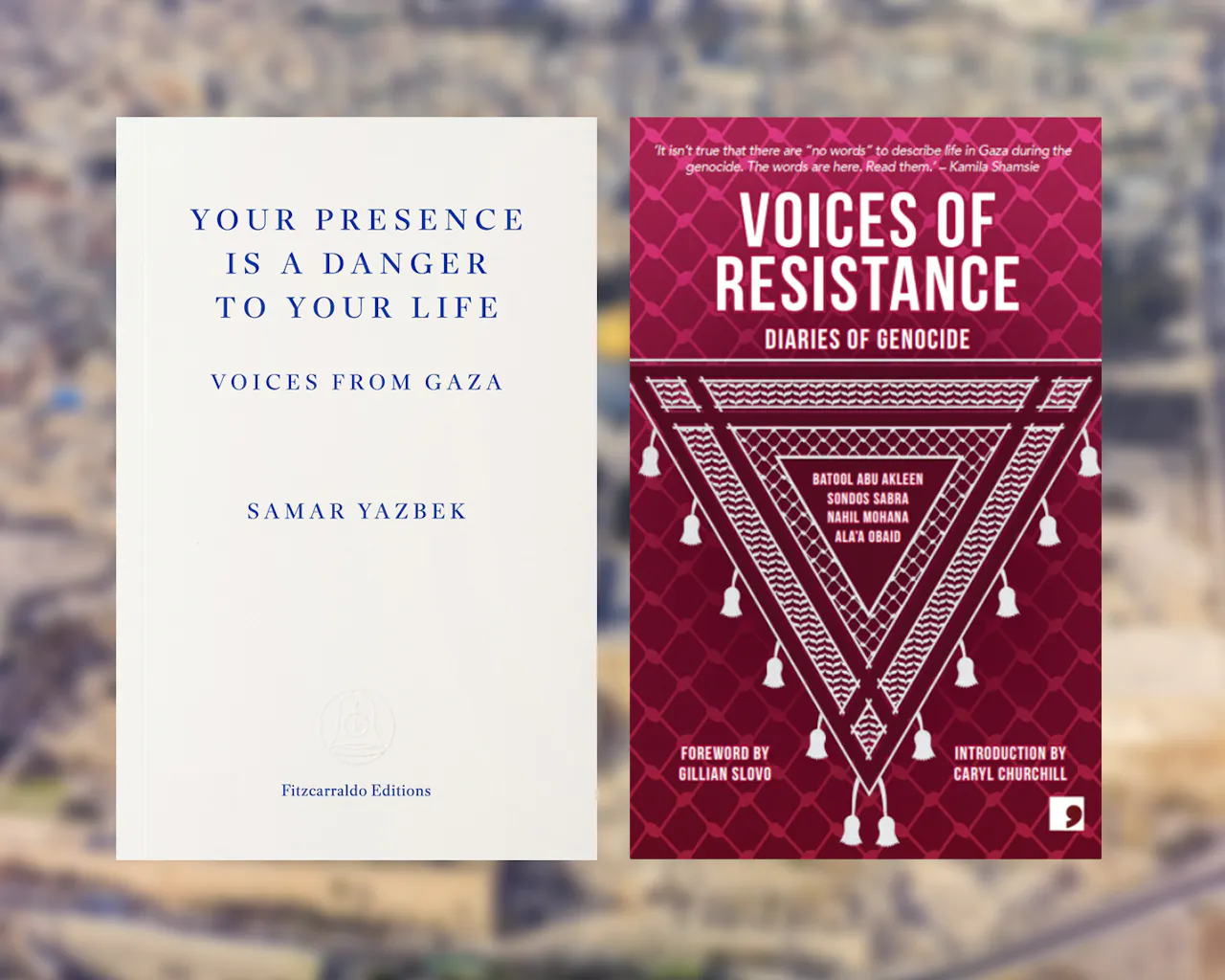
As the destruction of Gaza continues in real time, literature has become an important space for Palestinians to speak for themselves and their lives behind the headlines. This event brings together voices from two publications platforming these stories.
Based on interviews with survivors from across Gaza, Samar Yazbek’s Your Presence Is a Danger to Your Life gathers testimonies of loss, survival, and endurance, asking how we remember lives too often reduced to numbers through mainstream media coverage. Voices of Resistance shares first-person diaries by four women still living through bombardment, displacement, and famine, unveiling intimate accounts of grief, survival, humour, and care for one another.
During the event, Samar Yazbek will read from Your Presence Is a Danger to Your Life, and Sondos Sabra, one of the contributors to Voices of Resistance, will read her first-hand account of Israeli airstrikes, forced displacement and engineered famine. Both will then be joined by Leri Price in a conversation moderated by Yasmin El-Rifae, discussing the realities of writing these intricate narratives.
Support This Newsletter With a Click
If you’d like to help us keep publishing this free newsletter then please click on the link below from Proton Mail. You don’t need to do anything else - just click.
Thanks!
ADVERTISEMENT:
Free email without sacrificing your privacy

Gmail tracks you. Proton doesn’t. Get private email that puts your data — and your privacy — first.
ADVERTISEMENT ENDS.
UK: Fargo Nissim Tbakhi Book Tour, 10-13 June

Fargo Nissim Tbakhi is going on a UK book tour with the87press to celebrate the UK publication of his debut collection Terror Counter, coming out in June. He will be reading in London, Edinburgh, and Glasgow.
Moving through sections of varying experimentalism, from an invented visual form (the Gazan Tunnel) to all-caps queer ecstatic, Terror Counter attempts to carve out a space for the negotiation of an alternative subjecthood. The voices in this collection are driven by despair, futility, utopia, vulnerability and the spirit of a collective liberation; they move in search of a lyrical voice which can inhabit both the paranoid preservationist mode that facilitates Palestinian survival, and the imaginative possibilities that might make possible Palestinian life. Terror Counter asks: where and how might a Palestinian subject escape the public consumption of American letters? And, ultimately, how can we continue to love each other amidst the endless terror of the colonial world?
London: Africa’s Last Colony & Parallels to Palestine, 11 June
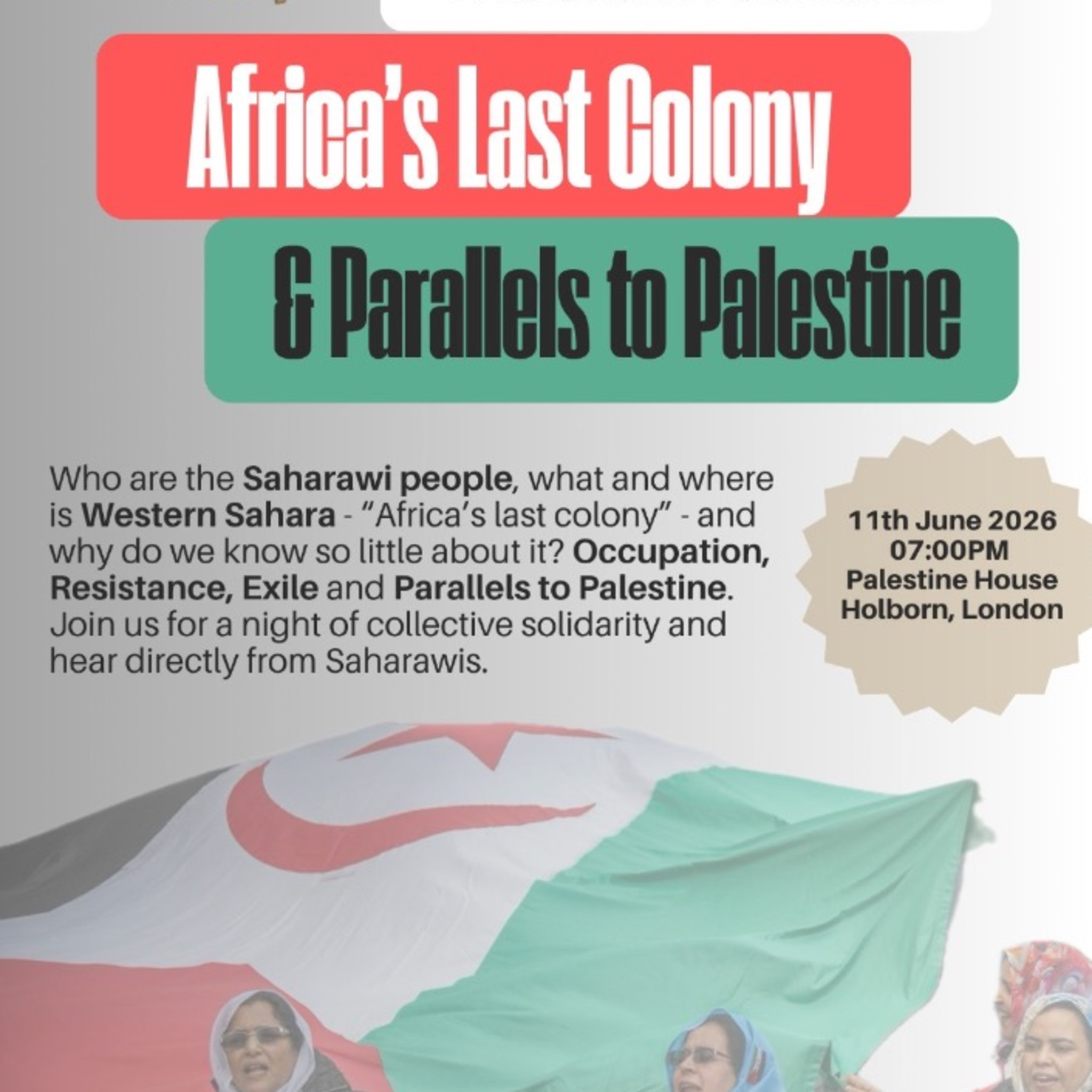
What and where is Western Sahara, Africa’s last colony, and why do we know so little about it? Western Sahara is the homeland of the Saharawi people, who have been displaced from their land since 1975 following the Moroccan invasion and ongoing occupation.
This event at Palestine House aims to explore the struggle of the Saharawi people and the striking parallels with the Palestinian struggle for liberation - including shared histories, forms of oppression and resistance, and a global system that continues to enable the two occupations. During the evening, you will also have the opportunity to hear directly from Saharawis living in Western Sahara (under Moroccan occupation) and from the Saharawi refugee camps in Tindouf, Algeria, as well as UK-based activists. Profits will go to the UK-based charities Sandblast and Growing Hope (Western Sahara Support Group), supporting Saharawis in the refugee camps.
Book of the Week

Homosexual Intifada is a powerful and groundbreaking anthology spotlighting the voices of queer Palestinian writers from both the diaspora and homeland. This first-of-its-kind collection features a dynamic range of LGBTQ+ Palestinian perspectives through deeply personal essays, short stories, poetry, comics, photo essays, and memoir.
Centering queer Palestinian identity and experience, this essential volume explores themes of displacement, assimilation, belonging, and love across geographies—from Jerusalem and Ramallah to New York, Beirut, and beyond. These stories, often silenced or misrepresented in Western media, challenge false narratives, boldly reclaim agency, and dismantle stereotypes.
Contributors include celebrated and emerging queer Palestinian authors such as Noor Hindi, Mejdulene Bernard Shomali, Elias Jahshan, Randa Jarrar, and more.
More than just a literary work, Homosexual Intifada is a radical act of visibility. It challenges the pinkwashing of queer identities in service of imperial agendas and affirms the existence, resilience, and diversity of LGBTQ+ Palestinians worldwide. This collection is a vital contribution to queer literature, Arab identity, and decolonial thought.
Homosexual Intifada is out now from Interlink Books.

Our latest issue of The Key features original reporting on the censorship of Palestine in Hollywood, testimony from a doctor in Gaza, and a dispatch from the organizers of the strike at this year’s Venice Biennale. It’s all critical new writing intended to deepen our understandings of how Palestine shapes the rest of the world and how, in turn, the rest of the world must shape itself toward Palestine.
These pieces will be free to read until Issue 007 of The Key publishes next week, so be sure to check them out.
And take a look at our growing archive of literary and critical work - available to subscribers from $2 a month. We hope to keep publishing urgent new work in The Key for a long time to come, and ensuring that it can be as free as widely available as possible - but we need your help to do so. Consider becoming a paid subscriber now.
Media Roundup
Five Poems by May Ziadeh – Five poems from May Ziadeh’s first collection, published originally in French in 1911, and newly translated by Rose DeMaris: “Egypt called in a serious voice / and already my boat’s rocking / bears new fruit— / But sea, whisper your lullabies / please, because I hurt so much. / Soft waves of home, sob for me.”
Palestine, Iran, and the Unraveling of Western Hegemony – Yara Hawari and Tareq Baconi consider how the US-Israeli war on Iran has altered the political calculus among Gulf states and other regional actors in ways that are reshaping how Palestinian political groups, and the Palestine liberation movement globally, are strategizing for the future.
To Break the Siege – Piper French reports on the flotilla movement that aims to break Israel’s siege on Gaza, its connections to migrant solidarity work in the Mediterranean, and debates over its efficacy in confronting Israel and states that are complicit in the siege and the genocide.
Art Not Genocide – Selma Dabbagh writes about the heightening repression of Palestine solidarity in the UK and Europe, which seems only to embolden Israel and its supporters.
Saint Levant: The Pop Star From Gaza Caught Between Passionate Fandom and Bitter Disapproval – Nesrine Malik profiles the musician Saint Levant, and considers whether mainstream success means sacrificing the radical political demands that gave birth to his musical sensibilities.
Trump Wants the Palestinians to Pay for the U.S. Occupation of Gaza – Ahmed Alqarout writes about how the so-called Board of Peace has introduced measures to take money from the West Bank in order to subsidize its occupation of Gaza.
Bombed, Poisoned, and Ignored: Israel's Ethnic Cleansing of South Lebanon – Walid el Houri writes about Israel’s invasion and ongoing destruction of south Lebanon, occupying nearly a fifth of the country’s territory with total impunity and active support from the US.
The Infrastructure of The Resistance – Hassan Shehadi writes, in Christina Cavalcanti's translation, of the everyday acts of rejection and defiance that make it impossible for Israel to permanently re-occupy the south of Lebanon: “No security belt has ever lasted. No border strip has ever stood the test of time. No yellow line will remain. The blood and might of the fighters will erase it. The land will grow greener than before, and the village alleys will come back to life more vibrant than ever. Sooner or later, the occupier will once again seek an escape from the quagmire of the South. We will mourn the land as we mourn the departed. Wild poppies and eucalyptus trees will grow from it.”
Hungry Palestinians in Gaza Protest World Central Kitchen Scaling Back Amid Rising Food Costs and Israeli Blockade – Abdel Qader Sabbah and Sharif Abdel Kouddous report on the fallout of World Central Kitchen’s decision to halve its operations in Gaza, leaving many without income and many more at risk of starvation.
Why European Enemies of Jews and Palestinians Embraced Zionism – Joseph Massad considers how the long imperial histories of European attempts to colonize Palestine, from the Crusaders to the Napoleon, have always ended in failure, offering a lesson for the present.
Ireland’s Quiet Complicity – Hugo Harvey describes how the Irish government’s pro-Palestine rhetoric masks its role in supporting US military involvement in the genocide in Gaza.
Martyrdom: The First Act of Return – Writing about south Lebanon, Fatima Joumaa argues, in this essay translated by Saseen Kawzally, that the martyrs are the ones who guide people home: “I want this rubble to serve another purpose, not just as evidence of a crime, but as proof of a life that was once lived.”
That’s it from us for this week. There’s no more scroll. But you can still help us keep publishing this newsletter by giving this advert from beehiiv a click! Thanks.
ADVERTISEMENT:
What’s next is almost here.

On July 16th at 1PM ET, beehiiv is going live with a look at the future of publishing, audience growth, and digital business.
What started as a newsletter platform has evolved into something much bigger: a place where creators and brands can grow, monetize, and own their audiences without stitching together half the internet to make it work.
The next chapter starts live at the Summer Release Event.
Join us to see what’s coming next.
ADVERTISEMENT ENDS
OK now that really is it. See you next week!
