
Hello, and welcome to this week’s dispatch.
Scroll down for:
An exclusive reflection on the current PalFest Bookshelf selection by the book’s editor;
The landmark opening of an exhibition on the Nakba at the Canadian Museum for Human Rights;
A joint photography presentation of the ruins of Palestinian villages by Ahmad Al-Bazz and Alan Gignoux;
A benefit concert for mutual aid to Lebanon and Palestine in Toronto;
Sami Al-Ajrami’s The Keys to My House as your Book of the Week; and
Your weekly Media Roundup.

From the PalFest Bookshelf: Editor Tamara Sampey-Jawad on Samar Yazbek’s Your Presence Is a Danger to Your Life

The June/July pick for the PalFest Bookshelf is Your Presence is a Danger to Your Life by Samar Yazbek, translated by Leri Price. We asked the book’s editor at Fitzcarraldo, Tamara Sampey-Jawad, what her experience of working on this book was like:
Your Presence Is a Danger to Your Life is not an easy book to read. I say this not to put people off, but to acknowledge what it requires of its readers. To stay with the words, to bear witness, not to look away.
For my part, it was not an easy book to edit. I had previously worked on another collection of testimonies – What Have You Left Behind? by Bushra al-Maqtari, tr. Sawad Hussain – and so I thought I was prepared for what this work would entail. But nothing can truly prepare you for what human beings can do to one another, or for what they can now do at such a remove: the mechanised cruelty enabled by AI, drones and iris scanners. At times, too, there is a feeling of madness that takes hold. You find yourself focused on minor, inconsequential matters – the placement of a comma or en dash – when the substance before you is one of such horror. Yet that experience mirrors the broader reality: day-to-day life continues, platitudes abound, and the material reality of genocide remains unchanged.
While I found this book difficult to edit, I was always conscious that the burden on me was slight compared to that borne by Leri Price, who spent months translating these testimonies, and by Samar Yazbek, who has carried the stories and faces of survivors with her ever since. Most of all, though, I think of the twenty-six people whose testimonies appear in this book; of all those whom Samar met and listened to, whether or not their stories found their way into these pages; and of the people of Gaza more broadly. I think of what they have endured, I think of their courage and their resilience, and I realise what’s required of me is very little; it is the least I could do.

Winnipeg: Palestine Uprooted - Nakba Past and Present, Now thru November 2028
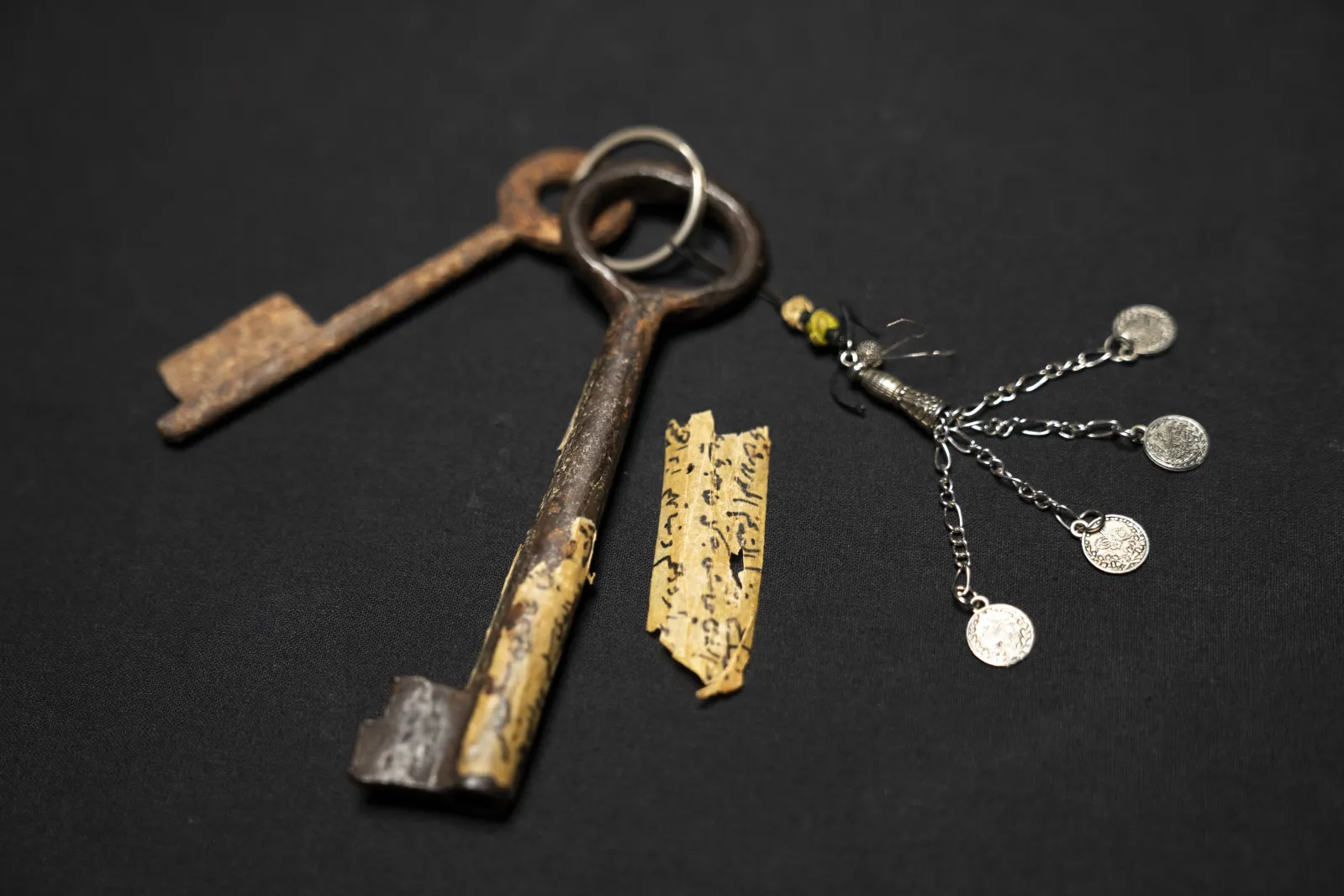
The exhibit Palestine Uprooted: Nakba Past and Present has just opened at the Canadian Museum of Human Rights in Winnipeg. It explores the human rights violations related to the ongoing forced displacement and dispossession of Palestinians.
Palestinians use the term al‐Nakba — Arabic for “the catastrophe” — to describe their mass displacement in 1948. For many, this uprooting is not a closed chapter of history. It is an experience that endures, shaped by wars, military occupation and violations of human rights across five generations.
Present‐day violence in Gaza and elsewhere in the occupied Palestinian territory is understood in relation to past experiences of displacement, war and loss. In 1948, militias, followed by Israeli forces, expelled civilians, destroying or emptying hundreds of villages amid regional war and lasting instability. Around 750,000 Palestinians were forcibly displaced during the creation of the State of Israel.
Today, millions of Palestinians remain refugees, living in exile around the world or in camps across the region. This intergenerational trauma lies at the heart of personal stories and human rights issues explored in this exhibit.
Featuring personal stories told through objects and video testimonies, the exhibit presents Palestinian Canadians reflecting on their ongoing struggle for justice and human rights. Together with art, photos and text, these elements reveal enduring patterns of loss and resistance.
London: Documenting the Ruined Villages of Palestine, 7 July

You are invited to explore Alan Gignoux’s photography exhibition Homeland Lost at P21 Gallery and attend a presentation by Ahmad al-Bazz of his recently published book, The Erasure of Palestine. The presentation will be followed by an in-conversation between the two photographers, moderated by Milena.
Homeland Lost is an exhibition of works by award-winning documentary photographer Alan Gignoux. The project juxtaposes portraits of Palestinian refugees displaced in 1948 and their descendants with photographs of their former homes and villages inside Israel. Created between 2004 and 2005 and first exhibited in 2006, this is the first time that works from Homeland Lost have been shown in the UK since their exhibition at the Barbican as part of the Palestine Film Festival in 2008.
Published in 2025, twenty years after the creation of Homeland Lost, Ahmad al-Bazz’s The Erasure of Palestine is the culmination of a three-year journey to document what remains of the hundreds of Palestinian villages and towns depopulated and destroyed during the creation and expansion of Israel from 1948 to the present.
Bringing these two projects into dialogue, the conversation will explore the photographers’ motivations and experiences of making the work, as well as the enduring significance of Palestine’s depopulated villages as places of memory, loss, and continuing presence. Reflecting on two decades of change, the discussion will consider what these landscapes reveal about history, identity, and the ongoing struggle against erasure.
Toronto: Voices for Lebanon Benefit Concert, 12 July
.png)
Voices for Lebanon is a fundraiser show at DROM Taberna, featuring powerful spoken word and music performances by Zico, Janice & AJ, Mir Kashif Iqbal, and Sam-r.
This group of Toronto-based musicians are coming together for one night of incredible music, along with amazing raffle prizes and vendors, and donating all proceeds from ticket and raffle sales to the Palestine Children’s Relief Fund’s (PCRF) Lebanon Urgent Relief program. This fund provides children and families in Lebanon with lifesaving services, like medical care, food, hygiene kits, and other essential supplies during a time of great hardship.
Don’t miss out on the chance to connect, contribute, and make a difference while enjoying an unforgettable experience with community!
Book of the Week

At dawn on October 13, 2023, a week after the Hamas attack on Israel and the start of the war in the Gaza Strip, Palestinian journalist Sami al-Ajrami locks the door of his home in Jabalia, where he has lived all his life. According to the instructions of the Israeli army, he and his family are evacuating to the south.
For the Italian newspaper La Repubblica, Al-Ajrami begins a diary in which he reports on the escalating conflict and the journey to southern Gaza. He writes about the constant search for a safe shelter, for food and warmth, but also about the sadness of leaving everything behind and the constant fear of the bombings. These daily reports form the basis for this book.
He writes without embellishment, only what he sees and hears. Al-Ajrami describes the days, the waiting, the bombs, the hunger and thirst, the deaths. He describes the little things people do to keep each other going: the jokes they make, the stories they tell each other. What he does to distract children during bombings: he solves a Rubik's cube, while the children look on as if hypnotized.
The Keys to My House is a chronicle of an immense tragedy, of daily life in the bomb-ravaged Gaza Strip, but also an intimate portrait of a family experiencing the drama of war firsthand.
This is the human story behind the cold numbers from Gaza. The story of a father who cannot protect his daughters, of a son who cannot bury his father properly and has to leave his mother behind. But this is also monumental journalism: factual, informative, and detailed. As if it wants to say: “This is how it is, this has happened, this is happening now. It's on paper, you just have to read it.”
The Keys to My House is out tomorrow from Interlink Books.
Media Roundup
Translating Trauma, the Trauma of Translating – Leri Price speaks to Tugrul Mende about the difficulties of translating Samar Yazbek’s Your Presence is a Danger to Your Life: Voices from Gaza, and the particular moral responsibility author and translator alike have in handling the testimonies of genocide survivors.
Safety Is When There’s No One Dying – Mary Turfah writes about how Israel’s assault on Palestine and Lebanon has reconfigured how children understand the world.
Palestine is the World in its Future Tense – In a review of the Venice Biennale and the attendant conflicts and contradictions around the festival, such as the strike by art workers and the censorship by festival authorities, Selma Dabbagh considers how Palestine has laid bare the limits of state-sanctioned cultural expression.
The State of Israel vs Dr. Hussam Abu Safiya: Silencing a Witness – Omar Abdel-Mannan suggests that the ongoing detention of Dr. Hussam Abu Safiya since December 2024 is part of a concerted attempt to bury their testimonies to Israel’s crimes in Gaza and to drive other healthcare workers to remain silent.
A Yearning – Mariam Mushtaha describes the many structural barriers that have prevented her and others from being able to pursue educational opportunities outside of Gaza.
Israel Is Tearing Down the American Order That Once Protected It – Abdaljawad Omar argues that Israel is pursuing newly adversarial relations with countries like Egypt and Turkey as part of a broader attempt at replacing US hegemony with Israeli hegemony in the region.
The Will to Resist: Sinwar and the Agency Dilemma in Gaza – Nadine N. Sayegh biographizes Yahya Sinwar to understand the political conditions that turned him into “the ultimate historical protagonist”
Israel Bombs Palestinians in Beach Tents in Gaza – Abdel Qader Sabbah reports on an Israeli airstrike in Gaza, in violation of the so-called ceasefire, which killed one child and maimed several others near tents on the beach.
Israel’s New Lynching Law Was Inspired by America’s Death Penalty – Khury Petersen-Smith examines how the new anti-Palestinian death penalty in Israel is the latest in a series of racist, discriminatory policies and practices emerging out of the US-Israeli strategic relationship.
The No-State Solution: Histories and Realities – In this extended essay, TK argues against a state-based approach to “peace” in Palestine or anywhere else: “Palestine possesses global resonance because it is the theater that shows where all states, including ones that claim to be democratic, could end up: unapologetically lawless entities precisely because they have the capacity to become such, and because ‘state reason’ offers no natural immunity against disasters it itself produces.”
Sahar Khalifeh’s ‘Free’ – An excerpt from Sahar Khalifeh's autobiography, A Novel for My Story, translated by Nada Hodali: “Hadn’t I been planning for all these years, deep down, to be free, to restart my life, to become everything I’d dreamed about, discovering what I had of poetry and colors and music?”
Thanks for reading. More next week.
