
Hello, and welcome to this week’s dispatch.
Scroll down for:
A hybrid workshop at the Palestinian Museum in Birzeit on land and colonialism in Palestine and North Africa;
A conversation with the Jenin journalist Obada Tahayna and a screening of Jenin, Jenin in New York;
A virtual discussion on the end of Hamas governance in Gaza;
Jean Said Makdisi’s Beirut Fragments as your book of the week; and
Your weekly media roundup.

Birzeit & Virtual: Land, Law, and Colonial Legacies in Palestine and North Africa, 28 July
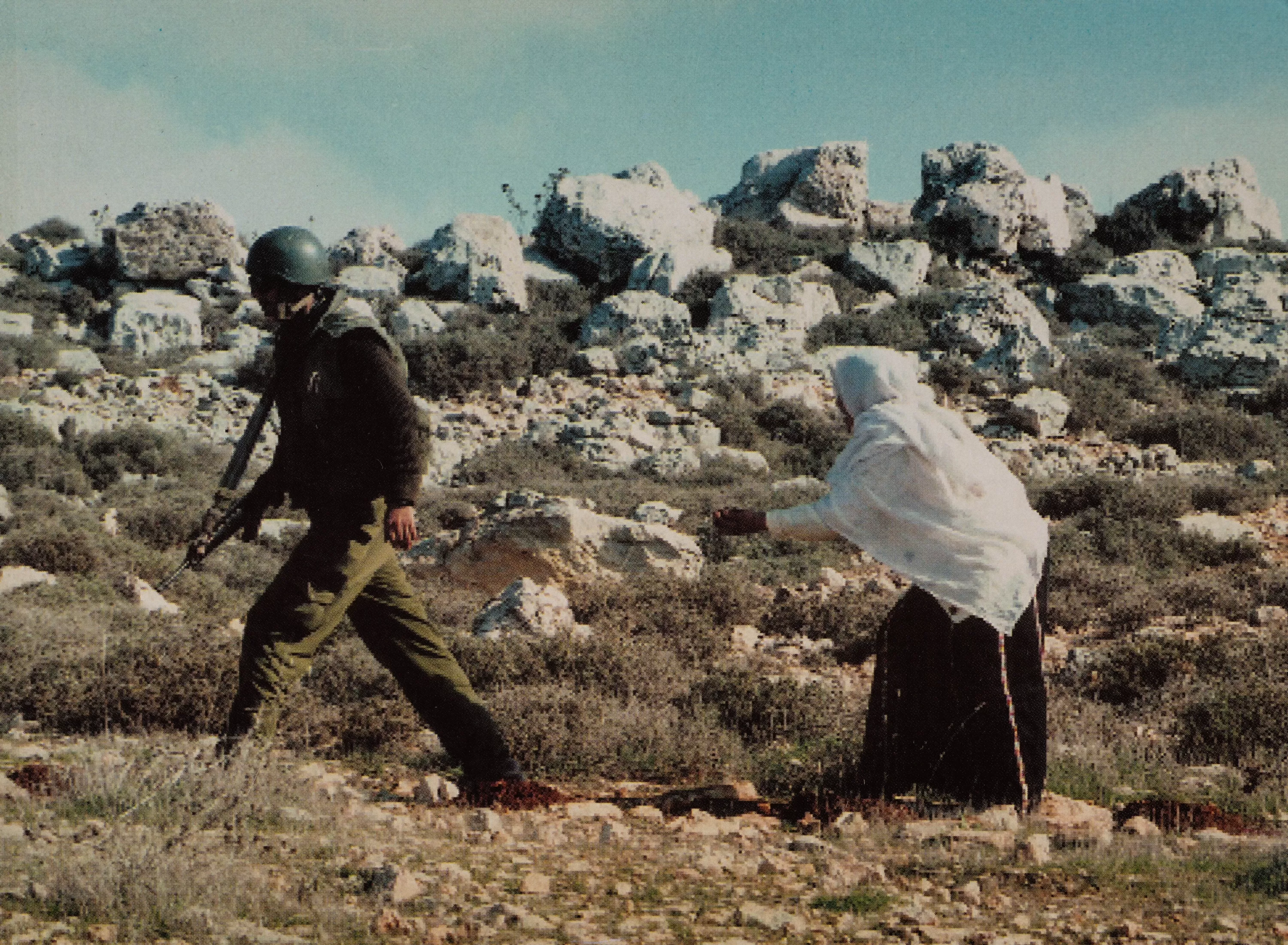
The Land Conversations series at the Palestinian Museum in Birzeit continues with sociologist Soraya el-Kahlaoui, who brings experiences from Morocco and Tunisia into a comparative reading with the Palestinian land question. At stake is how colonial laws reshaped land tenure, transformed commons into new forms of property, and gave rise to social and political transformations whose effects remain present in struggles over land today.
How have colonial legal systems shaped the relationship between people and land? And what might these connected histories reveal about land: its meanings, its forms of belonging, and the paths through which it is claimed and reclaimed?
Drawing on the entangled histories of Palestine and North Africa, the conversation explores how land is reclaimed and how colonial legal legacies can be read anew. It also examines the political and cultural meanings of Palestinians of Morocco, a name adopted by some communities in Morocco to express shared histories of colonial dispossession and the enduring ways these histories shape relations to land.
Join the Palestinian Museum in person or virtually for a conversation that rethinks land beyond ownership: as history and memory, as a social and political relation, and as an enduring site of struggle, meaning, and redefinition.
New York: Jenin, Jenin with journalist Obada Tahayna, 24 July

Join CCNY SJP for an afternoon of reflection, education, and conversation as we welcome Jenin-based journalist Obada Tahayna for a live discussion and Q&A, where he will share firsthand accounts and insights from Jenin. Following the discussion, we’ll screen the acclaimed documentary Jenin, Jenin (2002).
This is an opportunity to hear directly from a journalist reporting on the ground, engage in meaningful dialogue, and deepen your understanding of the lived realities and resilience of the people of Jenin.
Baked goods, drinks, keffiyehs, bags and more will be available at the event.
Subscribe to The Key
Our latest issue of The Key came out last week, featuring some remarkable work by our contributors: a photo essay profiling the wife and daughter of the late Walid Daqqa, a meditation on Palestine solidarity at the World Cup, and a new poem from Gaza.
We are proud to publish work like this, which considers Palestine to be the center of the world. But while we are committed to keeping this work free upon publication, we depend on paid subscribers to ensure we can support the writers producing this work. So we hope you would consider supporting this work by becoming a paid subscriber.
For $2 a month, you’ll get new articles on The Key, as well as full access to its growing archive and the PalFest Podcast - and you’ll be the first to know about our upcoming events in your city.
At $10 a month we’ve organised for 10% discounts at bookshops and publishers around the world, as well as in our own shop.
For $15 you’ll get a PalFest Bookshelf book selection in the mail every two months, along with unique extras.
There are even more options at $25 and above - check out our Subscriber tiers and see what might work for you.
Thanks for supporting our work.

Virtual: Governing Under Siege, 27 July

With Hamas' governance of Gaza coming to an end, join Riverway to the Sea to reflect on its 20-year period of rule and the future of Palestinian resistance.
On 6th July, after 20 years of governing Gaza, Hamas dissolved its Government Emergency Committee to remove any pretexts for Israel’s ongoing occupation of the Strip. The move will facilitate the transfer of administrative authority in Gaza to a civilian technocratic authority reporting directly to Trump’s Board of “Peace.”
At this critical juncture, it is important to reflect on how Hamas moved from resistance to governance, the challenges it faced and how it sought to overcome them, its current levels of popularity and what the future now holds for the people of Gaza, for the Palestinian resistance, and for Palestine.
The panel will feature Dr. Azzam Tamimi, Prof. Sami Al-Arian, and Gazan journalist Abubaker Abed. Register here.
Book of the Week

A landmark memoir, first published in 1990, that stands as a testament to survival, memory, dignity, and the stubborn beauty of insisting on one’s place in the world.
Jean Said Makdisi—Palestinian writer, scholar, and sister of the late critic Edward Said—has lived in Beirut since the 1970s. First published in 1990, Beirut Fragments endures as a beautifully wrought, intimate record of civilian life through Lebanon’s fifteen-year civil war and the Israeli invasion of Lebanon in 1982.
At once clear-eyed and deeply compassionate, a portrait of everyday survival—shattered streets, sudden silences, the fragile rituals of family life—told with a storyteller’s grace and emotional precision. As Jean and her husband choose to remain in their war-torn city, raising their children and teaching at local universities, she captures both the terror and the tenderness of living through catastrophe.
Amid ongoing regional violence and global patterns of displacement and erasure, Beirut Fragments offers a rare, layered perspective on identity, endurance, and the radical act of staying put when the world tries to unroot you.
Newly republished and with a new introduction by Angela Flournoy, Beirut Fragments is out now from Outsider Editions.
Media Roundup
Receiving the Wound – A thousand days since Al-Aqsa Flood, an anonymous writer takes stock of sacrifice, martyrdom, and the meaning of the world from the viewpoint of Gaza.
Beirut Fragments – An excerpt from Jean Said Makdisi’s Beirut Fragments, first published in 1990 and newly republished this month, about how Israel’s 1982 bombing campaign in Lebanon echoes through the decades: “I had a sense of timelessness, as though the siege had always been and would always be; as though I had known no other reality. There was no work and no play, no proper time for doing this or that, for sleep or waking. We slept when we could; we woke when we had to. The structure of time collapsed, and hours fell about us like stones off a broken building. Sundays, Mondays—all the days of the week were alike and lost their character, and all the dates of the month as well.”
Israel Is Trying To Extinguish Palestinian Cultural Life in East Jerusalem – Hala Gourani writes about Israeli crackdowns on cultural institutions in East Jerusalem such as El Hakawati Theatre, Educational Bookshop, and others, as part of its attempt to Judaize all of Jerusalem.
The Nakba Is an Inheritance for All Palestinians – Elias Jahshan speaks of his own family inheritance, and why it’s important to mourn and commemorate the Nakba.
Sisterhood, Resistance, and Sumud: Lessons from Damon Prison – Zarefah Baroud profiles Palestinian women released from Israel’s Damon Prison through prisoner exchanges to show the forms of collective defiance and care which allow these women to survive the carceral violence of the Israeli state.
PEN America's "Silent Moratorium" Prompts Very Loud Criticism – Sohini Desai reports on the controversies surrounding PEN America after it issued a report on the so-called censorship of Israeli writers that framed BDS as discriminatory.
Between the Goalposts and the Genocide – Marah Abdel Jaber writes about the forms of Palestine solidarity on display at the World Cup, even as FIFA has tried to normalize Israel through sport.
In the West Bank, Religious Zionists Are Realizing a Long-Held Vision – Jared Hillel reports on the accelerating pace of Jewish settlement in the West Bank, leading to the demolition of more Palestinian homes and the ethnic cleansing of more Palestinians.
Law & Order: Higher Ed Unit – Huda Fakhreddine writes about how her life became twisted into a plot for the television show Law and Order in a manner that vilifies Palestinians and vindicates Zionism.
Paradise Way: Watching Sirāt after Gaza – Youssef Rakha reviews the film Sirāt, arguing that it orchestrates Sufi wisdom in a contemporary, apocalyptic setting to offer a powerful, ‘postmuslim’ response to the world after Gaza.
Ungrounding: A History of Genocide Written into the Soil – Selma Dabbagh reviews Eyal Weizman’s new book Ungrounding, which studies the mechanics behind Israel’s genocide in Gaza, arguing that the book provides “a methodology for the future that encourages us all to do what we can to alter the current course of destruction.”
Thanks for reading. More next week.
